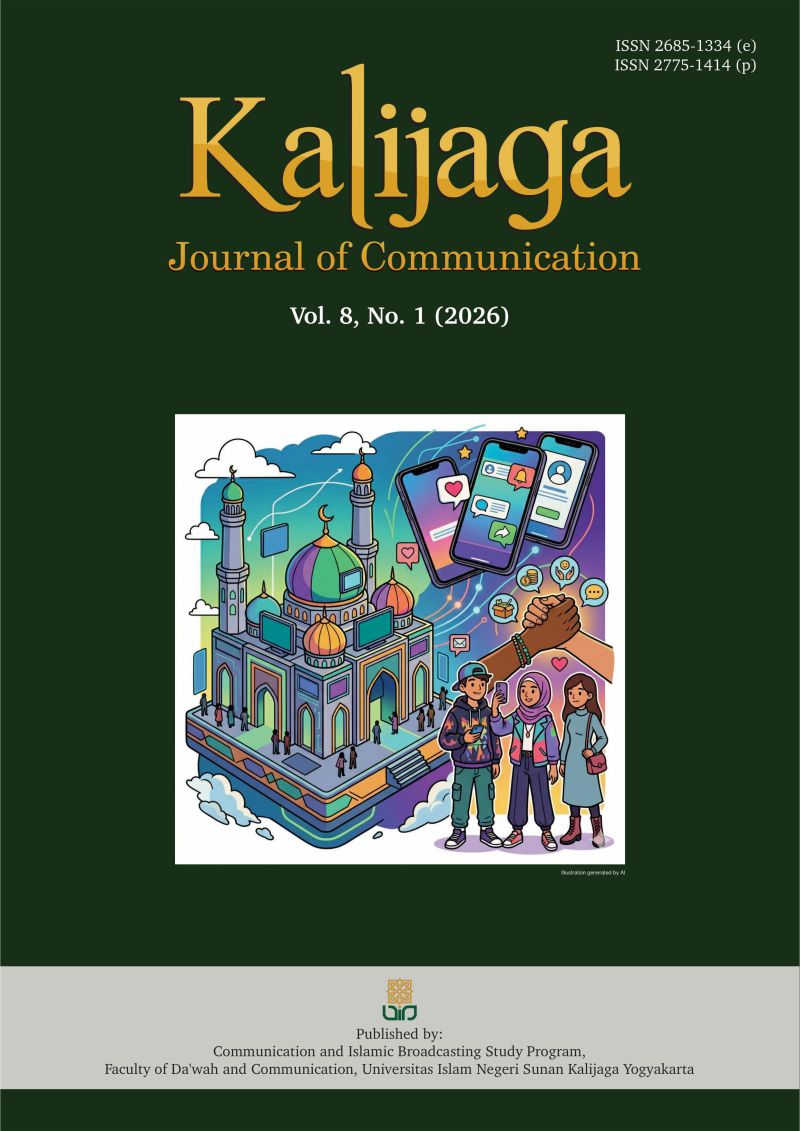
Mosques in the Digital Era: Contesting Sacred Space, Culture, and the Identity of Generation Z Muslims
DOI:
https://doi.org/10.14421/kjc.81.07.2026Keywords:
digital mosque, hybrid space, generation z, sacred negotiation, muslim identity, digital literacyAbstract
The digital era has transformed mosques from purely sacred spaces into hybrid spaces that integrate both physical and digital dimensions. This study aims to analyze the dynamics of contestation over values, culture, and the identities of Generation Z Muslims during this transformation. Using a critical qualitative literature review, the study explores how negotiations over the meaning of sacredness emerge as worship practices, preaching, and community life in mosques become infused with digital technologies. The findings reveal that digitalization does not necessarily erode sacredness; rather, it becomes a medium for its redefinition, shaped by tensions between traditional authority, local cultural values, and the logic of digital efficiency. Generation Z emerges as a key actor shaping a hybrid Islamic identity by blending ritual piety with digital participation, such as through social media da’wah content and sharia-based financial applications. However, this transformation faces concrete challenges, including gaps in digital infrastructure and literacy among mosque administrators and congregants. The significance of this study lies in its contribution to enriching the discourse in the sociology of religion by positioning technology not merely as a tool, but as part of broader processes of cultural adaptation and identity formation. The study underscores the need for a holistic mosque management approach that balances technological integration with the preservation of the community’s spiritual and cultural values.
References
Achmad, S. (2022). Digital literacy as a foundation for religious moderation learning at Salatiga’s Al-Hijrah Tingkir Islamic Boarding School. Paedagogia: Jurnal Pendidikan, 11(1), 119–129. https://doi.org/10.24239/pdg.Vol11.Iss1.208
Al-Dosari, A., & Alzitawi, D. (2023). The Islamic identity of the youth of Qatar's community college in light of the Islamic culture curriculum to meet the challenges posed by contemporary global values. International Journal of Academic Research in Progressive Education and Development, 12(3). https://doi.org/10.6007/ijarped/v12-i3/19439
Al-Krenawi, A. (2016). The role of the mosque and its relevance to social work. International Social Work, 59(3), 359–367. https://doi.org/10.1177/0020872815626997
Alidia, D., Julita, F., Putri, S., Sari, R., & Wismanto, W. (2024). Masjid menjadi ruang sinergi pendidikan dan pelatihan bagi masyarakat modern. Moral, 1(4), 198–204. https://doi.org/10.61132/moral.v1i4.272
Anurogo, D., Ramba, H., Putri, N., & Putri, U. (2023). Digital literacy 5.0 to enhance multicultural education. MIER, 1(2), 109–179. https://doi.org/10.23917/mier.v1i2.3414
Arifin, S., Ratnasari, R., & Pertiwi, T. (2024). Exploring the impact of QRIS technology on Gen Z intention to contribute infaq to mosques. Istinbath, 23(2), 306–320. https://doi.org/10.20414/ijhi.v23i2.729
Aunul, S., & Handoko, D. (2022). Digital religion: How digital immigrants access religious content during pandemic. Islamic Communication Journal, 7(1), 77–88. https://doi.org/10.21580/icj.2022.7.1.10088
Ben-Lulu, E. (2021). Zooming in and out of virtual Jewish prayer services during the COVID-19 pandemic. Journal for the Scientific Study of Religion, 60(4), 852–870. https://doi.org/10.1111/jssr.12746
Boote, D. N., & Beile, P. (2005). Scholars before researchers: On the centrality of the dissertation literature review in research preparation. Educational Researcher, 34(6), 3–15. https://doi.org/10.3102/0013189X034006003
Braun, V., & Clarke, V. (2006). Using thematic analysis in psychology. Qualitative Research in Psychology, 3(2), 77–101. https://doi.org/10.1191/1478088706qp063oa
Campbell, H. (2005). Considering spiritual dimensions within computer-mediated communication studies. New Media & Society, 7(1), 110–134. https://doi.org/10.1177/1461444805049147
Channa, G., Naz, A., & Mugheri, H. (2024). The adoption and utilization of technology in the mosques: A case study of Islamabad. SRA, 2(2), 1893–1908. https://doi.org/10.70670/sra.v2i2.246
Cooper, H. (2016). Research synthesis and meta-analysis: A step-by-step approach (5th ed.). Sage Publications.
Dani, J., & Mukti, B. (2023). Komunikasi digital pada organisasi masjid sebagai pengembangan daerah. Jurnal Syntax Transformation, 4(2), 236–240. https://doi.org/10.46799/jst.v4i2.697
Darajat, D. M., Rosyidin, I., & Fahrudin, D. (2022). Pesantren and madrasa-based digital literacy practices: The case of the Darunnajah Islamic Boarding School, Jakarta. Islamic Communication Journal, 7(2), 257–272. https://doi.org/10.21580/icj.2022.7.2.13619
DiGregorio, B. D., Corcoran, K. E., Colyer, C. J., & Stein, R. E. (2021). “When the waves roll high”: Religious coping among the Amish and Mennonites during the COVID-19 pandemic. Religions, 12(9), 678. https://doi.org/10.3390/rel12090678
Ghafournia, N. (2020). Negotiating gendered religious space: Australian Muslim women and the mosque. Religions, 11(12), 686. https://doi.org/10.3390/rel11120686
Hidayat, A., Al-Aziz, M., Imyansah, M., Marzila, L., & Wismanto, W. (2024). Masjid sebagai sentral komunikasi sosial dalam penyebaran informasi untuk mendukung pembangunan masyarakat Islam. Moral, 1(4), 51–60. https://doi.org/10.61132/moral.v1i4.214
Hidayat, A., Taufiq, A., Sunaryono, S., Munzil, M., Muhammad, H., & Subadra, S. (2024). Digital mosque management strengthening workshop to enhance the competence of mosque administrators in Malang City. Community Empowerment, 9(4), 727–732. https://doi.org/10.31603/ce.11237
Hudia, T., Supriadi, S., Yolanda, D. D., Rahmaditha, K., & Alkaf, R. (2023). Islamic education in the era of disruption. GIC Proceeding, 1, 237–241. https://doi.org/10.30983/gic.v1i1.172
Husni, M. (2024). Authenticity in Islamic sacred spaces: Case studies of distinctive regional mosques. JSCSR, 1(2). https://doi.org/10.61511/jscsr.v1i2.2024.770
Ibnu Waseu. (2025). Peran teknologi artificial intelligence (AI) dalam memperkuat dakwah Islam di era digital. Dialogika: Jurnal Penelitian Komunikasi dan Sosialisasi, 1(3), 257–265. https://doi.org/10.62383/dialogika.v1i3.561
Ibrahim, Y. (2020). Livestreaming the ‘wretched of the earth’: The Christchurch massacre and the ‘death-bound subject’. Ethnicities, 20(5), 803–822. https://doi.org/10.1177/1468796820926746
Ichsan, M. N., Utari, P., & Satyawan, I. A. (2020). Management of online and offline identity in multireligious society. International Journal of Multicultural and Multireligious Understanding, 7(2), 186–194. https://doi.org/10.18415/ijmmu.v7i2.1438
Imamuddin, M., & Isnaniah, I. (2024). Integration of Islam and mathematics: Religious and mathematics education in Grand Mosque of West Sumatra. Al-Ishlah: Jurnal Pendidikan, 16(2), 640–650. https://doi.org/10.35445/alishlah.v16i2.4724
Irbathy, S., Mukminin, M., Fahma, N., & Ramdhan, T. (2025). Digital literacy training for Muslim community leaders in Klaten Utara, Indonesia to enhance da’wah communication. Transformasi, 2(1), 125–136. https://doi.org/10.62383/transformasi.v2i1.1077
Jesson, J., Matheson, L., & Lacey, F. M. (2011). Doing your literature review: Traditional and systematic techniques. Sage.
Kirom, C., Cahyadi, I., Afandi, J., Adni, R., Cahya, B., & Muflih, B. (2024). Assistance in management and technology-based mosque digitalization to improve the quality of community services. Jurnal Pengabdian Undikma, 5(2), 205. https://doi.org/10.33394/jpu.v5i2.10920
Lindgren, T. (2018). Religious conflicts: Opportunity structures, group dynamics, and framing. Al-Albab, 7(1), 17–32. https://doi.org/10.24260/alalbab.v7i1.961
Lomachinska, I., & Hryshyna, Y. (2024). Internet generation in religious cyberspace: Worldview challenges of the digital age. Skhid, 6(2), 20–27. https://doi.org/10.21847/2411-3093.623
Louw, D. (2024). The threat of “soulful pornography” in cloud computing and metaverse thinking. Stellenbosch Theological Journal, 9(1), 1–18. https://doi.org/10.17570/stj.2023.v9n1.a22
Lubis, P., Rokan, M., & Silalahi, P. (2025). The determining factor of interest in paying zakat at Medan city mosques through QRIS using the TAM approach. JASA (Jurnal Akuntansi Audit dan Sistem Informasi Akuntansi), 9(2), 401–411. https://doi.org/10.36555/jasa.v9i2.2896
Mansir, F. (2022). Problems of Islamic religious education in the digital era. At-Ta’dib, 17(2), 284–295. https://doi.org/10.21111/at-tadib.v17i2.8405
Maslamah, M., & Anawarudin, A. (2023). Gerakan literasi berbasis digital library di komunitas masjid. JMM (Jurnal Masyarakat Mandiri), 7(2), 175–195. https://doi.org/10.31764/jmm.v7i2.12099
Maslamah. (2023). Digital library as strategies to improve digital Islamic literacy for education. Journal of Social Sciences and Humanities, 2(1), 14–22. https://doi.org/10.56943/jssh.v2i1.268
Moewashi Idharoel Haq, A. (2024). Implementation of the concept of progressive Islamic education in Muhammadiyah. Progresiva: Jurnal Pemikiran dan Pendidikan Islam, 13(1), 145–164. https://doi.org/10.22219/progresiva.v13i01.33207
Murdowo, S., Khasanah, F., & Arifin, W. (2025). Pelatihan pengenalan teknologi digital bagi pengelola masjid. Jurnal Pengabdian Kepada Masyarakat UBJ, 8(1), 85–92. https://doi.org/10.31599/063gtk51
Nuriyah, A., & Fakhri, U. (2022). Designing of digital-based Islamic social finance model through role of mosque. Jurnal Ekonomi & Keuangan Islam, 8(1), 77–93. https://doi.org/10.20885/jeki.vol8.iss1.art6
Pabbajah, M. (2024). Religious disorientation in the digital transformation. In E. Babulak (Ed.), Advances in Digital Transformation. IntechOpen. https://doi.org/10.5772/intechopen.1004235
Park, S. Y., Do, B., Yourell, J., Hermer, J., & Huberty, J. (2024). Digital methods for the spiritual and mental health of Generation Z. Interactive Journal of Medical Research, 13, e48929. https://doi.org/10.2196/48929
Pertiwi, Y., Febrieta, D., Mu’minin, A., & Ismail, I. (2022). Factors that affect the Islamic morals of Y and Z generation. Psikis: Jurnal Psikologi Islami, 8(2), 169–174. https://doi.org/10.19109/psikis.v8i2.6589
Pfeifer, S. (2022). Calling to prayer in ‘pandemic times’. Entangled Religions, 12(3). https://doi.org/10.46586/er.12.2021.9933
Pratiwi, M., Lucyanda, J., Santoso, B., Rudianto, D., Nurdini, D., & Karlina, R. (2022). Pelatihan pelaporan keuangan zakat, infak, sedekah berbasis digital. Indonesian Journal of Social Responsibility, 4(1), 15–27. https://doi.org/10.36782/ijsr.v4i01.110
Putro, H., & Setyowati, E. (2022). Development of AR application for cultural learning: Pathok Negoro Mosques. Journal of Artificial Intelligence in Architecture, 1(1), 1–9. https://doi.org/10.24002/jarina.v1i1.4835
Rachman, A., Saumantri, T., & Hidayatulloh, T. (2025). Transformation of religious authority in the digital era. Jurnal Ilmu Dakwah, 45(1), 107–122. https://doi.org/10.21580/jid.v45.1.25644
Rahman, T., & Aziz, Z. (2022). The improvement of digital media management of Khoirul Ummi Mosque. Community Empowerment, 7(8), 1330–1337. https://doi.org/10.31603/ce.7063
Ramis, I., Fahmi, M., Suryaningsih, S., & Fahrullah, A. (2025). Perekonomian berbasis masjid melalui UMKM. Jurnal Pengabdian Masyarakat Bakti Kita, 6(1), 62–71. https://doi.org/10.52166/baktikita.v6i1.8139
Rehmani, A., Abdi, K., Mabrouk, E., Zhao, T., Salami, B., Jones, C., et al. (2023). Impact of the COVID-19 pandemic on Muslim older immigrants. Canadian Journal of Public Health, 114(3), 378–388. https://doi.org/10.17269/s41997-023-00764-7
Rofidah, L., & Muhid, A. (2022). Media dan hibrid identitas keagamaan di era digital. Jurnal Dakwah dan Komunikasi, 7(1), 81–95. https://doi.org/10.29240/jdk.v7i1.4805
Salsabila, H., & Qodri, A. (2022). Da’wah of Islam in Generation Z. Journal of Takhrij Al-Hadith, 1(2), 46–56. https://doi.org/10.15575/jth.v1i2.23030
Samwil, S., Tjoetra, A., Yulianda, R., & Khairan, K. (2024). Revitalizing the role of mosques. ICoSPOLHUM Proceedings, 4, 00022. https://doi.org/10.29103/icospolhum.v4i.395
Sari, I., Syarief, M., & Suhartanto, D. (2023). Intention to save of Gen Z at Islamic banks. Indonesian Journal of Economics and Management, 3(2), 404–417. https://doi.org/10.35313/ijem.v3i2.4878
Sharma, A. K., & Shanmugaboopathi, D. P. S. (2022). Digital revolution in the contemporary world. Technoarete Transactions on Advances in Social Sciences and Humanities, 2(4). https://doi.org/10.36647/TTASSH/02.04.A005
Sikumbang, A. T., Dalimunthe, M. A., Kholil, S., & Nasution, N. F. (2023). Digital da’wah of Indonesian ulema. Pharos Journal of Theology, 105(1). https://doi.org/10.46222/pharosjot.1051
Snyder, H. (2019). Literature review as a research methodology: An overview and guidelines. Journal of Business Research, 104, 333–339. https://doi.org/10.1016/j.jbusres.2019.07.039
Soliman, E., Korany, H., & Maghraby, S. (2021). Media coverage of Christchurch mosque attacks. المجلة العلمية لبحوث العلاقات العامة والإعلان, 2021(21), 1–25. https://doi.org/10.21608/sjocs.2021.177764
Suslina, S., Tamim, R., Isti’ana, A., & Fauzi, R. (2025). Digitalization of mosque management. Raden Intan Proc. Fam. Hum., 2(1), 75–82. https://doi.org/10.47352/3032-503x.57
Tubergen, F., Cinjee, T., Menshikova, A., & Veldkamp, J. (2021). Online activity of mosques and Muslims in the Netherlands. PLOS ONE, 16(7), e0254881. https://doi.org/10.1371/journal.pone.0254881
Umar, T. M., Chaerowati, D. L., & Drajat, M. S. (2023). Digital literacy of santri. KnE Social Sciences. https://doi.org/10.18502/kss.v8i18.14238
Van Tubergen, F., Cinjee, T., Menshikova, A., & Veldkamp, J. (2021). Online activity of mosques. PLOS ONE, 16(7), e0254881. https://doi.org/10.1371/journal.pone.0254881
Wahyudi, F., Paramasatya, S., & Dir, A. (2022). Islamic identities under democratic regime. EAI Conference Proceedings. https://doi.org/10.4108/eai.14-9-2021.2321382
Webster, J., & Watson, R. T. (2002). Analyzing the past to prepare for the future: Writing a literature review. MIS Quarterly, 26(2), xiii–xxiii.
Wibowo, A. (2025). Islam and local culture. Jurnal Keislaman, 8(2), 322–335. https://doi.org/10.54298/jk.v8i2.552
Xiao, Y., & Watson, M. (2019). Guidance on conducting a systematic literature review. Journal of Planning Education and Research, 39(1), 93–112. https://doi.org/10.1177/0739456X17723971
Yaakub, S., Pranoto, W., Siswa, T., Windiarti, I., & Priyanti, R. (2025). Enhancing mosque governance via mobile system. IJSCSD, 1(1), 1–10. https://doi.org/10.63088/sf6bye60
Younis, A., & Kasim, H. (2023). Functional performance of octagonal plan mosques. Al-Qadisiyah Journal for Engineering Sciences, 16(4), 259–267. https://doi.org/10.30772/qjes.2023.143868.1041
Zainuddin, Z., Abidin, Z., Susanti, A., & Muttaqin, M. (2024). Innovation of Islamic religious education. Formosa Journal of Sustainable Research, 3(10), 2157–2168. https://doi.org/10.55927/fjsr.v3i10.11999
Zamroni, G., & Fahana, J. (2021). Implementasi framework MVC dalam sistem informasi masjid. Jika (Jurnal Informatika), 5(2), 184. https://doi.org/10.31000/jika.v5i2.4490
Zohdi, A., Al-Hafdi, F., & Alhalafawy, W. (2024). Digital platforms in Qur’an studies. Journal of Ecohumanism, 3(7), 3050–3062. https://doi.org/10.62754/joe.v3i7.4440
Downloads
Published
Issue
Section
License
Copyright (c) 2026 Siti Fadilla, Deddy Desmal, Muhammad Ritzky Saibi, Muhammad Deni Putra

This work is licensed under a Creative Commons Attribution-NonCommercial-ShareAlike 4.0 International License.
Authors who publish with this journal agree to the following terms:
- Authors retain copyright and grant the journal right of first publication with the work simultaneously licensed under a Creative Commons Attribution-NonCommercial-ShareAlike 4.0 International License. that allows others to share and adapt the work with an acknowledgement of the work's authorship and initial publication in this journal.
- Authors are able to enter into separate, additional contractual arrangements for the non-exclusive distribution of the journal's published version of the work (e.g., post it to an institutional repository or publish it in a book), with an acknowledgement of its initial publication in this journal.
- Authors are permitted and encouraged to post their work online (e.g., in institutional repositories or on their website) prior to and during the submission process, as it can lead to productive exchanges, as well as earlier and greater citation of published work (See The Effect of Open Access).