| Editorial Team |
| Peer Reviewers |
| Focus and Scope |
| Author Guidelines |
| Reviewer Guidelines |
| Journal Template |
| Contact |

 |
|
The Jurnal Living Hadis is an academic journal focusing on Hadith studies, published twice a year (January-June and July-December) by the Hadith Department, Faculty of Ushuluddin and Islamic Thought, State Islamic University of Sunan Kalijaga Yogyakarta. The Jurnal Living Hadis was launched in 2016 by the Hadith Department, Faculty of Ushuluddin and Islamic Thought, State Islamic University of Sunan Kalijaga Yogyakarta, at the same time as a new approach to hadith studies emerged, which highlighted the inseparable relationship between hadith and the traditions of society. In 2021, this journal was Sinta 3 accredited by the Ministry of Education of the Republic of Indonesia based on the Decree of the Directorate General of Higher Education, No. 36/E/KPT/2019.
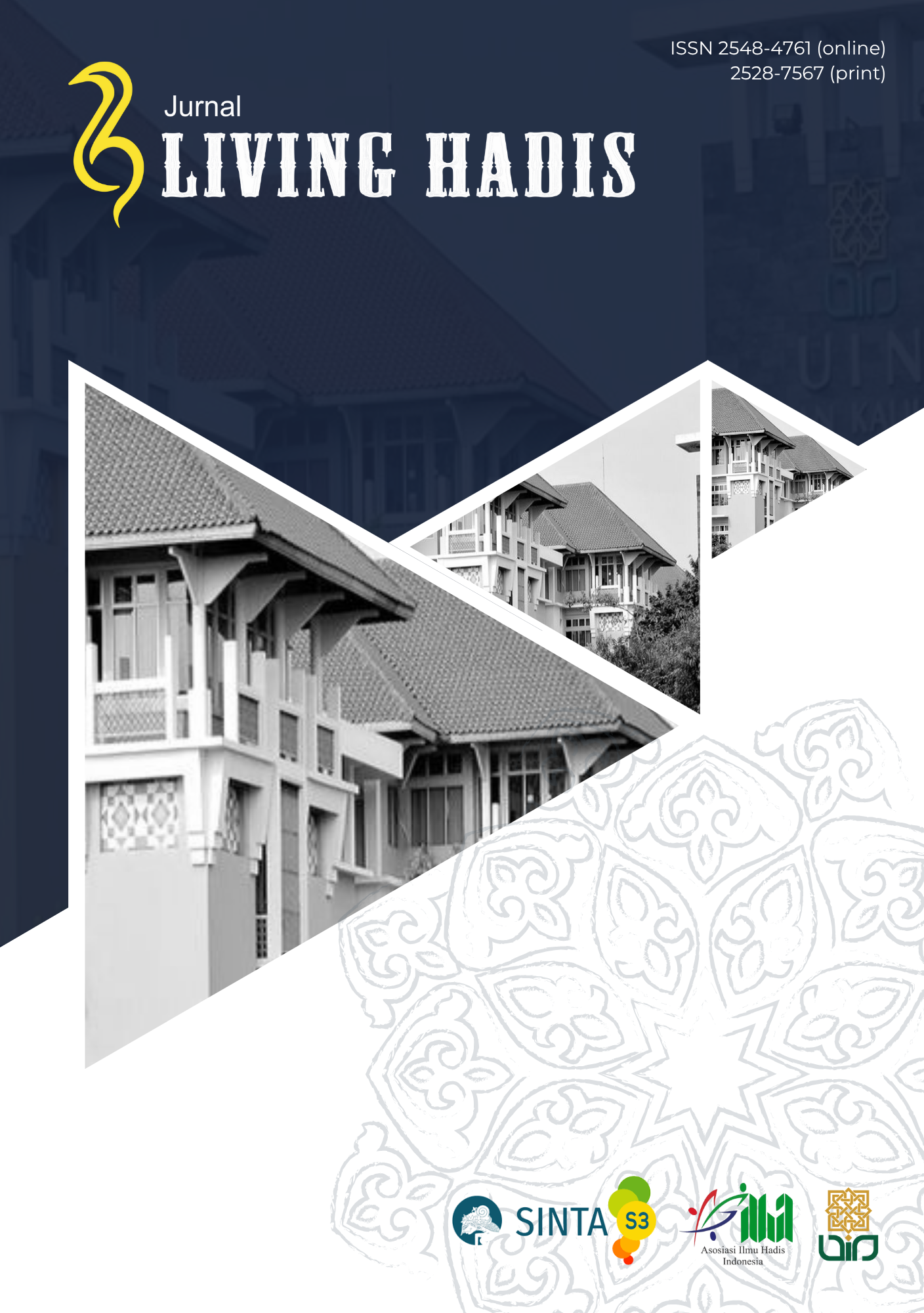
This issue offers an insightful collection of studies on applying hadith methodology to modern societal and scientific dynamics. It highlights the use of hadith verification methods as a critical framework against post-truth and hoax phenomena on social media, alongside local living hadith receptions such as moral solidarity in orphan almsgiving practices. The articles cover interdisciplinary inquiries—including scientific perspectives on light exposure and sleep quality—as well as critical discussions on the finality and formalization of hadith science and the algorithmic authority shaping youth piety in Indonesia. Together, these contributions highlight the dynamic relevance of prophetic traditions in confronting contemporary digital and scientific discourses.
Geographical Coverage: Indonesia, Egypt, and Jordan
| ACCREDITED |

| ASSOCIATED WITH |
| JOURNAL STATISTICS |

| INDEXED BY |





|
Jurnal Living Hadis ISSN 2528-7567| E-ISSN 2548-4761 Accredited by Director General of Research and Development Research and Development of the Ministry of Research, Technology and Higher Education of the Republic of Indonesia. Decree No: 36/E/KPT/2019
This work is licensed under |

