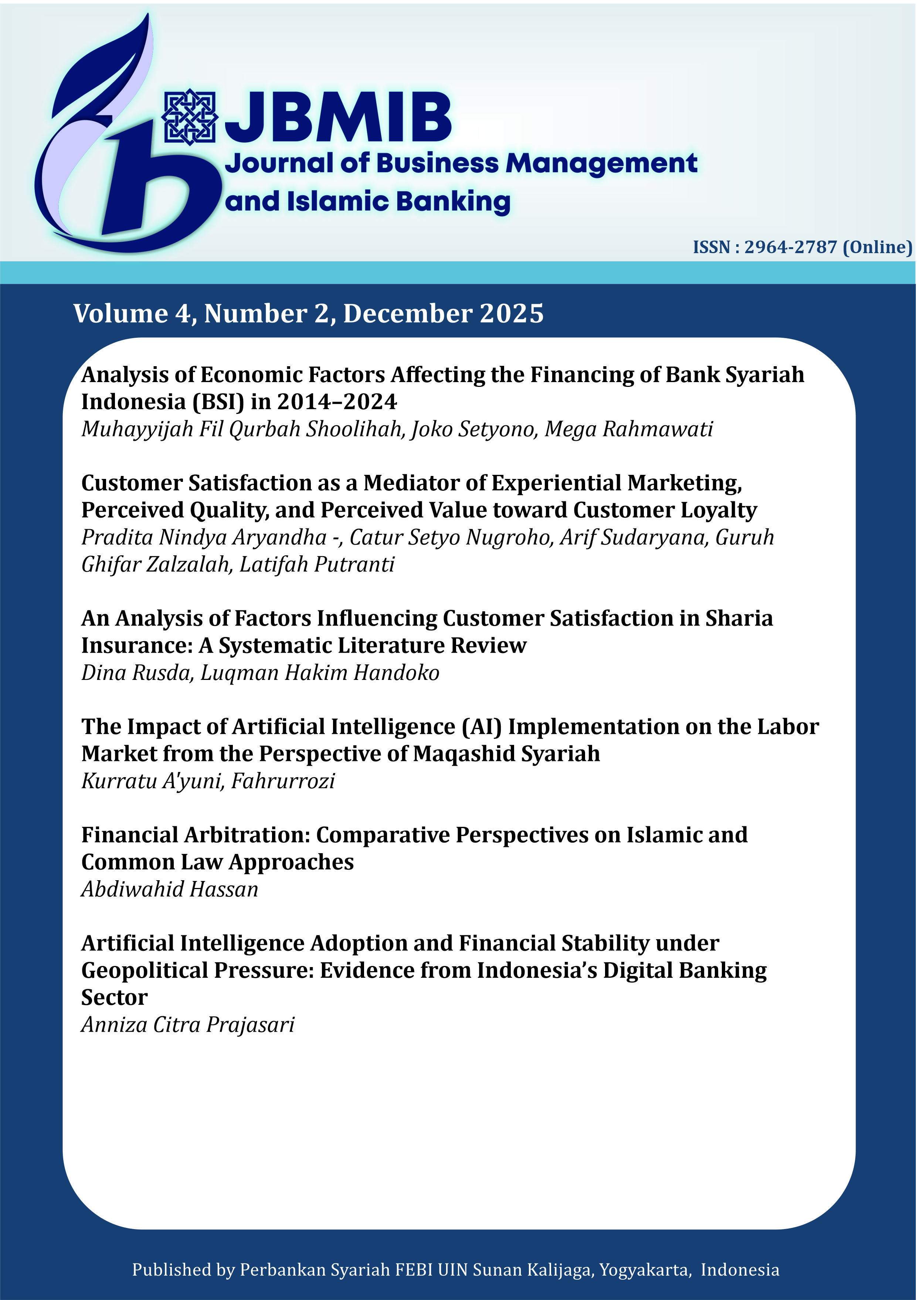
The Impact of Artificial Intelligence (AI) Implementation on the Labor Market from the Perspective of Maqashid Syariah
DOI:
https://doi.org/10.14421/jbmib.2025.0402-05Keywords:
Artificial intelligence (AI), Maqashid Syariah, Labor MarketAbstract
Research Aims: This study aims to analyze the impact of AI implementation on the labor market by integrating the Maqashid Syariah perspective as an ethical framework.
Methodology: This research employed a qualitative approach with library research methods. Data was collected from journals, books, research reports, and academic publications. Analysis was conducted using content analysis through data reduction, presentation, and drawing conclusions.
Research Findings: The implementation of AI has three main effects on the labor market: (1) productivity effect, namely increased efficiency, productivity, and work safety, (2) replacement effect, namely the shift in human roles due to automation, especially in routine work, and (3) recovery effect, namely the creation of new jobs that require high skills and digital competencies. AI increases productivity and opens up new job opportunities, but also raises challenges such as structural unemployment, skills gaps, and ethical implications. From the perspective of Maqashid Syariah, these impacts can be directed so that technological progress remains oriented towards the benefit through the principles of hifz al-mal (protection of property), hifz al-nafs (protection of life), and hifz al-'aql (protection of reason).
Theoretical Contribution: This research integrates Islamic ethics in understanding the transformation of the digital labor market.
Research limitation and implication: This research is limited to literature sources without empirical data support. The implications of this research can form the basis for formulating inclusive and sustainable employment policies.
References
Adha, L. H., Asyhadie, Z., & Kusuma, R. (2020). Digitalisasi Industri Dan Pengaruhnya Terhadap Ketenagakerjaan Dan Hubungan Kerja Di Indonesia. Journal Kompilasi Hukum, 5(2), 267–298. https://doi.org/10.29303/jkh.v5i2.49
Akbar, A., & Kurniawan, R. R. (2023). AI dan Dampaknya Pada Perekonomian Menurut Fiqih. Manajemen & Akuntansi Prabumulih, 7(1), 31–40.
Amelia, S. (2023). TRANSFORMASI PASAR TENAGA KERJA DALAM SEKTOR PERTANIAN PADA MASA PANDEMI COVID-19: DAMPAK DAN STRATEGI PASCA COVID-19. Sinora. https://sinora.maduradirectory.com/publication/87/
Arifah, I. D. C., Wijaya, M. I., & Sholihah, S. M. (2022). Job Replacement Artificial Intelligence di Industri Jasa: Tinjauan Pustaka Sistematis. Jurnal Ilmu Manajemen, 10(3), 911–929.
Arison HN. (2023). Analisis Ekonomi Ketenagakerjaan: Dampak Perubahan Pasar Tenaga Kerja Dalam Era Digitalisasi. INNOVATIVE: Journal of Social Science Research, 3(2), 14380–14385.
Asfar, A. M. I. T. (2019). ANALISIS NARATIF, ANALISIS KONTEN, DAN ANALISIS SEMIOTIK (Penelitian Kualitatif). January. https://doi.org/10.13140/RG.2.2.21963.41767
Eriana, E. S., & Zein, D. A. (2023). Artificial Intelligence (AI). In EUREKA MEDIA AKSARA.
Gbadegeshin, S. A., Al Natsheh, A., Ghafel, K., Tikkanen, J., Gray, A., Rimpiläinen, A., Kuoppala, A., Kalermo-Poranen, J., & Hirvonen, N. (2021). What Is an Artificial Intelligence (Ai): a Simple Buzzword or a Worthwhile Inevitability? ICERI2021 Proceedings, 1(November), 468–479. https://doi.org/10.21125/iceri.2021.0171
Hakim, F., Fadlillah, A., & Rofiq, M. N. (2024). Artificial Intellegence (AI) dan Dampaknya Dalam Distorsi Pendidikan Islam. Urwatul Wutsqo: Jurnal Studi Kependidikan Dan Keislaman, 13(1), 129–144. https://doi.org/10.54437/urwatulwutsqo.v13i1.1330
Hermanto, A. (2022). MAQASHID AL-SYARI’AH Metode Ijtihad dan Pembaharuan hukum keluarga islam. Literasi Nusantara Abad.
Jalili, A. (2021). Teori Maqashid Syariah Dalam Hukum Islam. TERAJU Jurnal Syariah Dan Hukum, 3(2), 71–80.
Khatami Fahmi Putra, M., M Zainul, L., Rusba, K., Nawawi, Y., & Hardiyono, H. (2024). Inovasi K3: Integrasi AI dan IoT untuk Meningkatkan Keselamatan Kerja. Ranah Research : Journal of Multidisciplinary Research and Development, 6(5), 2231–2239. https://doi.org/10.38035/rrj.v6i5.1056
Lubis, M. S. Y. (2021). Implementasi Artificial Intelligence Pada System Manufaktur Terpadu. Seminar Nasional Teknik (SEMNASTEK) UISU, 4(1), 1–7. https://jurnal.uisu.ac.id/index.php/semnastek/article/view/4134
Lusiana, Harun, M., Fathimah, E., & Indah Haryani Daulay, W. (2024). Challenges and Threats of Artificial Intelligence in Maqasid Sharia Perspective. KnE Social Sciences, 2024(3), 470–483. https://doi.org/10.18502/kss.v9i2.15004
Masrichah, S. (2023). Ancaman Dan Peluang Artificial Intelligence (AI). Khatulistiwa: Jurnal Pendidikan Dan Sosial Humaniora, 3(3), 83–101. https://doi.org/10.55606/khatulistiwa.v3i3.1860
Maulana, A., & Sari, N. (2024). Literatur Review Implementasi ArtificiaI Intellegence dalam Pertanian. Prosiding Seminar Nasional Informatika, 2, 516–530. https://rudyct.com/ab/Kecerdasan.Buatan(AI).dan.dampaknya.pada.Ekonomi.Dunia.pdf
Mc kinsey. (2019). Automation and the Future of Work in Indonesia. In Mckinsey & Company. https://www.mckinsey.com/~/media/mckinsey/featured insights/asia pacific/automation and the future of work in indonesia/automation-and-the-future-of-work-in-indonesia-vf.ashx
Mohadi, M., & Tarshany, Y. (2023). Maqasid Al-Shari’ah and the Ethics of Artificial Intelligence. Journal of Contemporary Maqasid Studies, 2(2), 79–102. https://doi.org/10.52100/jcms.v2i2.107
Muji, & Khairunnisa, S. (2024). Kecerdasan Buatan dan Fatwa Ijma : Perspektif Islam Terhadap Inovasi Modern. Afkaruna: International Journal of Islamic Studies, 2(1), 48–55. https://doi.org/10.38073/aijis.v2i1.1902
Nasution, M. S. A., & Nasution, R. H. (2020). Filsafat Hukum & Maqashid Syariah. KENCANA. https://books.google.co.id/books?hl=id&lr=&id=1g7uDwAAQBAJ&oi=fnd&pg=PP1&dq=info:YG6yLtcgSJQJ:scholar.google.com/&ots=AG7qv-dsBO&sig=CKGnMsqUshJWeismdzXdeB3yG2w&redir_esc=y#v=onepage&q&f=false
Paryadi. (2021). Maqashid Syariah : Definisi Dan Pendapat Para Ulama. Cross-Border, 4(2), 201–216.
Pratama, A. S., Sari, S. M., Hj, M. F., Badwi, M., & Anshori, M. I. (2023). Pengaruh Artificial Intelligence, Big Data Dan Otomatisasi Terhadap Kinerja SDM Di Era Digital. Jurnal Publikasi Ilmu Manajemen (JUPIMAN), 2(4), 108–123. https://doi.org/10.55606/jupiman.v2i4.2739
Putri Ahyang, G., & Hudaya, F. (2024). Artificial Intelligence: Katalisator Pertumbuhan Ekonomi Di Era Digital. JEBISH Journal of Economics Business Ethics and Science of History, 2(3), 103–109.
PwC. (2025). PwC’s 28th Annual Global CEO Survey Reinvention. In PwC.com. https://doi.org/10.1093/oso/9780197602737.003.0006
Rachmadana, S. L., Alkusuma Putra, S. A., & Difinubun, Y. (2022). Dampak Artificial Intelligence Terhadap Perekonomian. Financial and Accounting Indonesian Research, 2(2), 71–82. https://doi.org/10.36232/jurnalfairakuntansiunimuda.v2i2.3837
Rangkuti, M. (2024). Mengenal Artificial Intelligence (AI): Pengertian, Sejarah, Kegunaan, dan Contoh Penerapannya. Universitas Sumatera Utara (UMSU). https://umsu.ac.id/artikel/mengenal-artificial-intelligence-ai-pengertian-sejarah-kegunaan-dan-contoh-penerapannya/
Rifky, S., Kharisma, L. P. I., Afendi, A. R., Zulfa, I., Napitupulu, S., Ulina, M., Lestari, W. S., Maysanjaya, I. M. D., Kelvin, Sinaga, F. M., Muchtar, M., Judijanto, L., Halim, A., Laksono, R. D., Satyareni, D. H., & Rizal, A. A. (2024). Artficial Intilligence : Teori dan Pnerapan AI di Berbagai Bidang (Issue June). Sonpedia Publishing Indonesia.
Ririh, K. R., Laili, N., Wicaksono, A., & Tsurayya, S. (2020). Studi Komparasi Dan Analisis Swot Pada Implementasi Kecerdasan Buatan (Artificial Intelligence) Di Indonesia. Jurnal Teknik Industri, 15(2), 122–133.
Rokom. (2024). AI Mulai Wujudkan Efisiensi Pelayanan Kesehatan Indonesia. Sehat Negeriku, Kementerian Kesehatan RI. https://sehatnegeriku.kemkes.go.id/baca/umum/20240710/3345954/ai-mulai-wujudkan-efisiensi-pelayanan-kesehatan-indonesia/
Sumidartiny, A. N. (2025). Pengelolaan Harta Keluarga dalam Kerangka Maqasid Syariah Menuju Keseimbangan dan Keberkahan. Journal of Darunnajah Business School, 2(1), 39–48. https://ejournal.darunnajah.ac.id/index.php/j-dbs
Syafitri, M. A., Rusdjijati, R., & Murniningsih, R. (2024). KESEJAHTERAAN PEKERJA – ANALISIS DARI STATUS. Jurnal Ilmiah Ekonomi Bisnis, 29(2), 238–249.
Syamraeni, Sholichah, H., & Al Fajar, A. H. (2024). Transformasi Nilai Religius di Era Digital : Analisis Literatur Berdasarkan Tujuan Hifz al- ‘ Aql. Socio Religia, 5(2), 93–109.
Tarumingkeng, R. C. (n.d.). Kecerdasan Buatan (AI) dan Dampaknya pada Ekonomi Dunia. https://rudyct.com/ab/Kecerdasan.Buatan(AI).dan.dampaknya.pada.Ekonomi.Dunia.pdf
Wahyundaru, S. D. (2023). Dampak Artificial Intelligence Bagi Pekerjaan Manusia. Universitas Islam Sultan Agung (Unissula). https://unissula.ac.id/dampak-artificial-intelligence-bagi-pekerjaan-manusia/
WEF. (2025). Future of Jobs Report 2025. In World Economic Forum.
Widjaja, G. (2024). MAQASID SYARIAH DALAM REGULASI FINTECH : Analisis Kritis Kerangka Hukum Ekonomi Islam di Era Digital. 5(1), 23–36.
Wijaya, E. (2013). Analisis Penggunaan Algoritma Breadth First Search Dalam Konsep Artificial Intellegencia. Jurnal TIME, 2(2), 18–26. https://doi.org/10.51351/jtm.2.2.20136
World Economic Forum. (2025). Future of Jobs Report 2025. https://www.weforum.org/stories/2025/01/future-of-jobs-report-2025-jobs-of-the-future-and-the-skills-you-need-to-get-them/
World Economic Forum (WEF). (2020). The Future of Jobs Report 2020. https://www.weforum.org/publications/the-future-of-jobs-report-2020/in-full/executive-summary/
Yunos, A. S., & Hamdan, M. N. (2024). Artificial Intelligence in Healthcare : Analysis From the Perspective of Maqasid Al-Shariah. Journal of Information System and Technology Management, 9(35), 58–74. https://doi.org/10.35631/jistm.935004
Zed, M. (2014). Metode Penelitian Kepustakaan. Yayasan Obor Indonesia.
Zein, A. (2021). Kecerdasan Buatan Dalam Hal Otomatisasi Layanan. Jurnal Ilmu Komputer JIK, 4(2), 18. https://jurnal.pranataindonesia.ac.id/index.php/jik/article/download/96/49
Downloads
Published
Versions
- 2025-12-29 (2)
- 2025-12-25 (1)
Issue
Section
License
Copyright (c) 2025 Journal of Business Management and Islamic Banking

This work is licensed under a Creative Commons Attribution-ShareAlike 4.0 International License.
 All publication from Journal of Business Management and Islamic Banking are licensed under a Creative Commons Attribution-ShareAlike